How To Improve Wifi Speed at Home in 2026
February 24, 2026
Best WiFi Speed for Home 2026: How Much You Need
April 4, 2026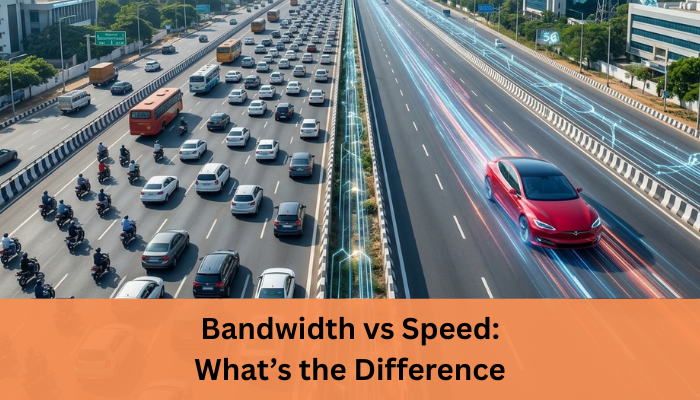
Bandwidth vs Speed: What’s the Difference (2026)
Slow downloads, buffering videos, and lag during video calls, it’s frustrating, especially when your plan promises “high speed.”
The real issue often comes down to Bandwidth vs Speed, a confusion that leads many people to pick the wrong internet plan and deal with poor performance every day.
Here’s the simple truth: bandwidth is the amount of data your connection can handle at once, while speed is how fast that data moves.
You need both working together for a smooth internet. Yet, a large number of users still misunderstand this.
In fact, studies show that over 60% of internet users assume higher Mbps always means faster performance, which isn’t always the case, especially in homes with multiple devices.
I’ve seen this firsthand. A few months ago, I upgraded to a higher Mbps plan thinking it would fix constant buffering during streaming.
The speed looked great on paper, but the problem didn’t go away. It turned out the issue wasn’t just speed, it was how bandwidth was being shared across multiple devices at the same time.
If you’ve ever wondered why your internet still feels slow despite a “fast” plan, you’re in the right place.
Let’s break down bandwidth vs speed in a clear, practical way so you can actually choose what works for you.
What is Bandwidth?
Bandwidth is the amount of data your internet connection can handle at one time. It doesn’t mean how fast your internet is, instead, it shows how much data can flow through your connection every second. Think of it as capacity, not speed.
Real-life example
The easiest way to understand bandwidth is with a highway example:
- A wider highway with more lanes can handle more cars at once
- A narrow road gets crowded quickly, even if cars are moving fast
- Similarly, higher bandwidth allows more devices and activities without slowing things down
So, if multiple people are streaming, gaming, or on video calls, higher bandwidth keeps everything running smoothly.
How bandwidth is measured
Bandwidth is measured in:
- Mbps (Megabits per second) – common for home plans
- Gbps (Gigabits per second) – used for very high-speed connections
Quick idea:
- 100 Mbps = good for streaming and small families
- 1 Gbps = ideal for heavy usage or many devices
In short, bandwidth tells you how much internet you can use at once without congestion.
What is Speed?
Speed refers to how fast data travels from a server to your device. It’s what you notice when a webpage loads instantly or a video starts without buffering. In simple terms, speed is about time, how quickly information reaches you.
Real-life example
Think of speed like a car on a road:
- A fast car reaches the destination quickly
- A slow car takes more time, even on an empty road
- Even if the road has many lanes (high bandwidth), a slow car (low speed) still delays the journey
So, speed determines how quickly your actions online feel responsive.
What affects speed
Several factors can impact your internet speed:
- Latency (ping)
Delay between sending and receiving data. Lower latency means faster response, important for gaming and video calls. - Network congestion
Too many users at the same time can slow things down, especially during peak hours. - Device limitations
Older phones, laptops, or routers may not support higher speeds. - Wi-Fi signal strength
Distance from the router or walls can reduce actual speed.
In short, speed defines how quickly you can access and use the internet in real time.
Bandwidth vs Speed: Key Differences
When comparing Bandwidth vs Speed, it’s important to know they affect your internet in different ways.
Side-by-side comparison table
Factor | Bandwidth | Speed |
Meaning | Data capacity | Data transfer rate |
Measured in | Mbps/Gbps | Mbps (often confused) |
Affects | Multiple users/devices | Loading time, responsiveness |
Example | Number of lanes | Car speed |
Quick summary
- Bandwidth = capacity
It shows how much data your connection can handle at once. Higher bandwidth helps when multiple devices are connected. - Speed = performance
It defines how quickly data reaches your device, affecting loading times and overall responsiveness. - You can have high bandwidth but still feel slow speeds if latency or congestion is an issue.
- Likewise, good speed with low bandwidth may struggle when many users are online.
In simple terms, bandwidth controls how much, while speed controls how fast. For smooth internet, you need the right balance of both, based on your usage.
Why Bandwidth and Speed Both Matter
For streaming
When it comes to Netflix, YouTube, or OTT apps, both bandwidth and speed play a role:
- High bandwidth allows multiple people to stream at the same time
- Good speed ensures videos load quickly and don’t buffer
- Low bandwidth often leads to constant buffering, especially in shared homes
- Low speed can cause delays in starting videos or quality drops
For gaming
Gaming needs more than just high Mbps numbers:
- Low latency (ping) is critical for real-time response
- Speed helps with downloading games and updates faster
- Bandwidth supports multiple devices without lag spikes
- Poor balance can cause lag, delays, and unstable gameplay
For work from home
Remote work depends heavily on stable internet:
- Video calls need consistent speed for clear audio and video
- Bandwidth ensures multiple meetings or devices don’t clash
- File uploads/downloads rely on good speed to save time
- Weak bandwidth leads to call drops or freezing screens
In daily use, you don’t just need fast internet, you need enough capacity and consistent performance together.
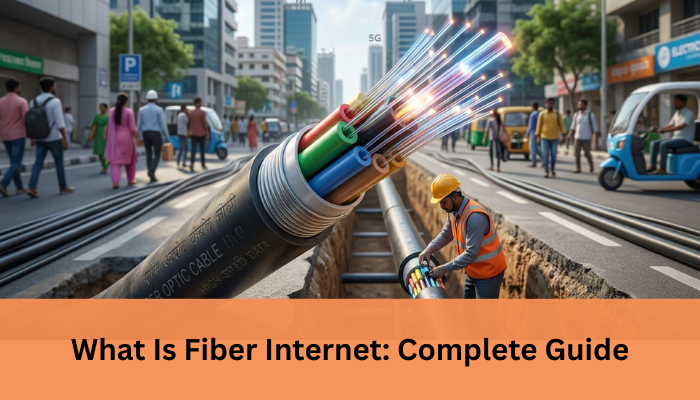
If you’re using modern connections, learning What Is Fiber Internet helps you understand how bandwidth and speed actually perform.
Common Myths About Bandwidth vs Speed
“Higher Mbps always means faster internet”
Many people assume that a higher Mbps plan guarantees faster performance, but that’s not always true.
- Mbps reflects bandwidth capacity, not actual speed experience
- If your network is congested or your device is slow, performance still drops
- You may not notice a difference if your usage doesn’t require high bandwidth
“Bandwidth and speed are the same”
This is one of the most common misunderstandings.
- Bandwidth = how much data can flow at once
- Speed = how fast data travels
- Both are measured in Mbps, which adds to the confusion
- They work together, but they are not interchangeable
“Only speed matters for gaming”
Speed is important, but it’s not the only factor.
- Low latency (ping) matters more for real-time gameplay
- Bandwidth helps when multiple devices are connected
- High speed alone won’t prevent lag if latency is high
Understanding these myths helps you make better internet choices.
How to Choose the Right Internet Plan
Understanding Bandwidth vs Speed helps you choose the right internet plan for your home.
Step-by-step checklist
Choosing the right plan becomes easier when you look at your actual needs:
- Number of users
More people means higher bandwidth is required to avoid slowdowns - Usage type
- Browsing and social media need less data
- Streaming, gaming, and video calls need more stable performance
- Required Mbps range
Pick a plan that matches your daily usage, not just the highest available speed
Quick recommendation table
Usage Type | Recommended Speed |
Basic browsing | 20–50 Mbps |
Streaming (HD/4K) | 100–200 Mbps |
Gaming + multiple users | 200–400 Mbps |
Heavy usage/home office | 400+ Mbps |
A simple rule: don’t overpay for unused speed, but don’t go too low either. Choose a plan that comfortably supports your household’s daily internet habits.
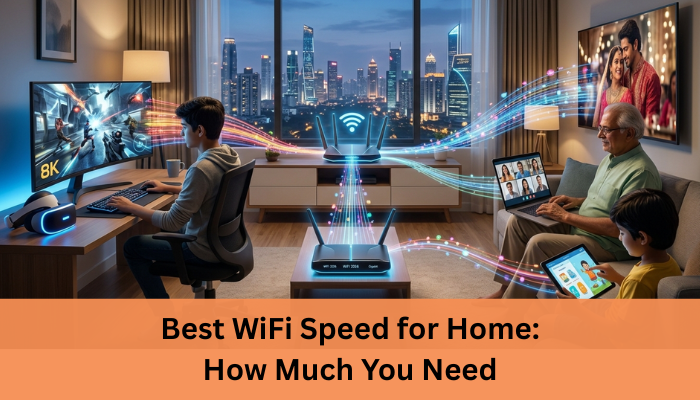
To make a better decision, you can also check our guide on Best WiFi Speed for Home to understand the right speed for your needs.
Real-Life Example (Simple Scenario)
Small family vs large household
Bandwidth needs can vary a lot depending on how many people are using the internet and what they’re doing.
- Small family (2–3 people)
- Light browsing, social media, occasional streaming
- One or two devices active at the same time
- 50–100 Mbps is usually enough for smooth performance
- Large household (4–6+ people)
- Multiple devices running together, phones, TVs, laptops
- Activities like streaming, gaming, video calls happening at once
- Requires 200–400 Mbps or more to avoid slowdowns
- What changes with more users?
- Bandwidth gets shared across devices
- Higher chances of buffering or lag if capacity is low
- Need for a stronger router and stable connection increases
In simple terms, the more people and devices you add, the more bandwidth you need to keep everything running without interruptions.
Final Thoughts
When it comes to bandwidth vs speed, the takeaway is simple, you need both working together.
Focusing only on high Mbps numbers won’t guarantee a smooth experience if your connection can’t handle your daily usage.
What really matters is choosing a plan that fits how you actually use the internet, whether it’s streaming, gaming, or working from home.
That’s where Internet Express makes a real difference. We don’t just offer plans, we help you pick the right one based on your household needs.
With reliable fiber connectivity, consistent speeds, and local support you can count on, you get an internet experience that actually works the way it should.
Our Fiber Broadband Plans are designed to give you the perfect balance of bandwidth and speed.
If you’re tired of buffering, lag, or confusing plans, it’s time to switch to a smarter connection.
Get in touch with Internet Express today and find the perfect plan for your home or business.
FAQs – Bandwidth vs Speed
What is the main difference between bandwidth and speed?
Is higher bandwidth always better?
What is a good internet speed for home use?
Does bandwidth affect gaming?
Why is my internet slow even with high Mbps?

Related posts