
Why Bhosari Chooses Internet Express for High-Speed Connectivity
July 28, 2025
How to Calculate Internet Speed: Simple Guide for 2026
December 16, 2025
Access to the internet is now a requirement for personal and professional purposes alike. Whether it’s telecommuting, eLearning or corporate cloud services, the need for fast and dependable internet is at an all-time high. As we approach 2026, a key discussion among users revolves around leased lines versus broadband, which provides speed, stability, and overall efficiency?
Broadband continues to be the option because of its cost-effectiveness and broad accessibility, whereas leased lines act as a high-end solution for companies needing reliable and continuous Internet connectivity. Grasping the distinction between leased lines and broadband can assist homeowners, students, gamers, telecommuters, and businesses in making informed choices.
Many businesses research Leased Line Vs Broadband to understand which internet connection delivers better reliability and long-term value.
This comprehensive guide covers all aspects from the functioning of each connection, to its advantages, drawbacks, costs, and practical applications enabling you to choose the Internet option that fits your requirements in 2026.
Why does selecting the internet connection matter in 2026?
The trends in internet use have shifted significantly over the past few years. Cloud computing, video calls, online teamwork, 4K video streaming, multiplayer games, and IoT gadgets demand a high-speed connection. Any interruptions or unreliability could lead to:
- loss of productivity
- Delays during online meetings or games
- Poor streaming experience
- Incomplete uploads or backups
- Slower business operations
As companies transition entirely or partially to platforms and people rely on online services around the clock, selecting the proper connection is more than a choice it’s essential.
What Is Broadband?

Broadband is an internet service delivered via shared public networks. It is commonly utilized in homes, small offices and rural locations because of its cost-effectiveness and straightforward installation.
How Broadband Works
Broadband relies on a network setup, which implies numerous users within the same area utilize bandwidth concurrently. During peak times when a higher number of individuals access the network simultaneously internet speeds decrease since the backbone is shared by all.
Typically broadband connections are asymmetric, indicating that download speeds surpass upload speeds. This suffices for tasks, including streaming and web surfing.
- Types of Broadband (Fiber, DSL, Cable, Wireless)
- Fiber Broadband – Rapid and reliable, utilizes fiber-optic wiring.
- DSL Broadband – Delivered via phone lines; slower however extensive to be had.
- Cable Broadband – Employs cables; offers excellent speeds but can be impacted by the number of users in the area.
Wireless Broadband (4G/5G) – Internet delivered via networks; excellent for mobility yet unreliable, inside buildings
Who Broadband Is Best For
Broadband is ideal for:
- Students
- Home users
- Casual internet users
- Gamers on a budget
- WFH professionals with moderate requirements
- Small offices with fewer devices
Broadband performs effectively when high stability is not essential.
Read Why you need high speed commercial broadband in your office.
What Does Leased Line Mean?
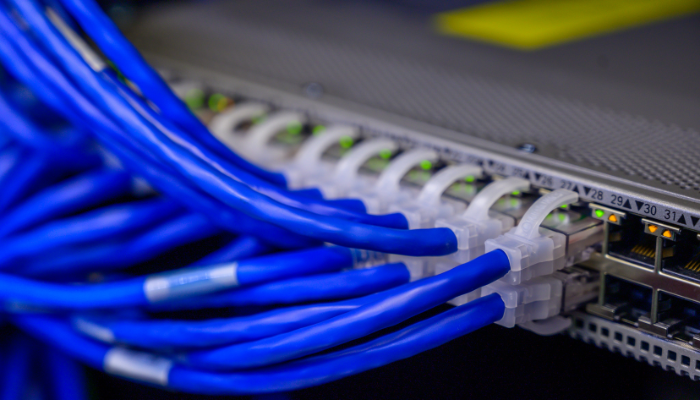
A leased line is an exclusive Internet link designated for one user or company. In contrast, to broadband it is not distributed among users, guaranteeing reliable bandwidth and steady speeds all day long.
How a Leased Line Works
A leased line provider establishes a point-to-point link between your location and their network, via fiber optic cables. This dedicated connection ensures:
- Dedicated bandwidth
- Constant speed
- Low-latency internet
- Minimum downtime
Leased lines include SLAs (Service Level Agreements) guaranteeing 99.5%–99.9% availability and quicker problem-solving.
Dedicated Bandwidth and Symmetric Speed
An important advantage is speed download and upload rates are identical. This is significant for companies that:
- Upload large files
- Host servers
- Use VoIP systems
- Conduct cloud backups
- Rely on video conferencing
Broadband cannot achieve this degree of reliability.
Who Requires a Leased Line
Leased lines are crucial for:
- Large and medium businesses
- Startups dependent on cloud tools
- IT companies
- Data centers
- Call centers
- Banks and financial institutions
- Remote teams needing stable connectivity
- CCTV remote monitoring, server hosting
Any company for which Internet outages mean lost income ought to look into a leased line.
Read how does a leased line work and why your business needs one.
Leased line vs broadband: Main differences
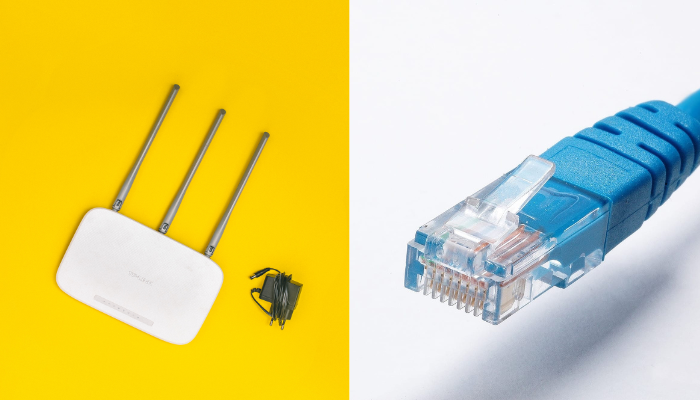
The comparison of Leased Line Vs Broadband becomes especially important when uptime and performance directly impact business operations.
Speed (symmetric vs. asymmetric)
- Broadband: high download speed, low upload speed
- Leased line: Same upload and download speed
When it comes to cloud services or video calls, having upload and download speeds is crucial.
Reliability and uptime guarantee
- Broadband does not provide commitments on uptime.
- Leased lines offer uptime guaranteed by SLA, usually exceeding 99.5%.
Bandwidth sharing vs dedicated connection
Broadband: Shared with many users
Leased Line: Dedicated Internet connection just for you
This explains why broadband speed varies while leased line speed stays consistent.
Contention Ratio
- Broadband: High conflict ratio (1:20 / 1:50 / even 1:100)
- Lease line: 1:1 battle ratio (no sharing)
latency and performance
Broadband delay changes depending on the network traffic.
Leased lines offer Internet with latency, making them perfect for VoIP, gaming, and applications requiring real-time responsiveness.
Security and Static IP
Broadband might. Might not come with a static IP.
Typically, leased lines come with an IP, which allows:
- Server hosting
- Secure remote access
- CCTV integration
- Enterprise applications
Upload Speed Differences
Broadband upload speeds are often 10-20% of download speeds.
Leased lines provide upload and download rates, making them perfect for:
- Cloud sync
- Uploading videos
- online backup
- Scalability and future readiness
Cost Comparison

Broadband expands gradually, often restricted to packages.
Leased lines range from 10 Mbps up to 1 Gbps or higher based on the requirements of the business.
- Cost Comparison
- Broadband Pricing Structure
- Broadband fees are generally affordable and encompass:
- Monthly rental
- Optional static IP charges
- Router installation fees
- Costs differ depending on the city and Internet Service Provider.
Leased Line Pricing and SLAs
- The expense of a leased line involves:
- Monthly bandwidth rental
- Installation or fiber laying cost
- Router or CPE cost
- SLA-backed support
Depending on bandwidth and location, plans may vary.
Reasons Leased Lines Are Pricier (Yet Offer Greater Value)
Leased lines come at a cost due to the following features:
- Dedicated fiber infrastructure
- 1:1 contention
- 24/7 priority support
- Uptime guarantee
- Private link not affected by neighborhood usage
Companies view it as an investment, not a cost, because downtime has an impact on income.
In discussions around Leased Line Vs Broadband, dedicated bandwidth and symmetric speeds are often the deciding factors for enterprises.
Pros and Cons

Broadband: advantages and limitations
Advantages:
- Affordable
- Quick installation
- Good download speed
- Ideal for light to moderate usage
Limitations:
- Shared bandwidth
- Lengthy upload durations
- No guaranteed uptime
- Fluctuating performance
- Not suitable for mission-critical operations
Leased Line: Advantages and Limitations
Advantages:
- Dedicated bandwidth
- Symmetric speed
- High reliability
- Low latency
- Fixed IP address provided
- SLA-backed service
- Best for critical workloads
Limitations:
- Higher cost
- Longer installation time
- More suited for businesses than casual users
Which Option Is Best for You?

Understanding Leased Line Vs Broadband helps decision-makers choose the right connection based on speed, cost, and scalability.
For Small Businesses
Broadband may be sufficient for teams; however, if the company utilizes cloud services, CCTV, or depends on Zoom/Teams, a leased line guarantees reliability.
For Large Enterprises
- A leased line is required because of:
- High user load
- Cloud dependency
- VoIP phones
- Server hosting
- Safety requirements
For Remote Teams & WFH Users
Nevertheless, if the user conducts video conferences all day, a dedicated connection offers performance.
For high-demand use cases (VoIP, CCTV, Cloud, Server)
A leased line is the option, due to:
- Low jitter and latency
- Higher uptime
- Symmetric speed
- Stable uploads for surveillance and cloud sync
- Real-World Scenarios
Real-World Scenarios
When Broadband Is Enough
Broadband is perfect for:
- Homes with moderate usage
- Students attending online classes
- Streaming and browsing
- Gaming with good fiber plans
- Small teams not using heavy cloud tools
When a Dedicated Line Is Required
A leased line becomes necessary when:
- Internet downtime = Business loss
- Big groups operate concurrently
- A Static IP is required for servers
- You operate CCTV surveillance
- Video conferencing is continuous
- There are strict performance requirements
Conclusion
Choosing between a leased line and broadband in 2026 is no longer just about price, it’s about reliability, performance, and how critical the internet is to your daily operations. Broadband continues to be a practical and cost-effective option for homes, students, casual users, and small teams with moderate internet needs. It works well for browsing, streaming, and light work-from-home tasks where occasional speed drops won’t cause major disruption.
As digital dependency increases, the debate around Leased Line Vs Broadband continues to shape how organizations plan their internet infrastructure.
However, for businesses that depend heavily on cloud applications, VoIP calls, CCTV monitoring, remote servers, or continuous video conferencing, a leased line is the clear winner. With dedicated bandwidth, symmetric speeds, low latency, and SLA-backed uptime, leased lines eliminate the uncertainty that comes with shared connections. When downtime directly impacts productivity or revenue, the stability of a leased line becomes an investment not an expense.
At Internet Express, we help businesses across India choose the right connectivity solution based on real usage, not assumptions. From high-speed broadband to enterprise-grade leased lines with guaranteed uptime, static IPs, and 24/7 support, our solutions are built for performance, security, and growth.If you’re unsure which connection is right for your home or business, talk to the experts at Internet Express today. We’ll assess your requirements and help you switch to an internet solution that truly works for you now and in the future.