Charholi to Alandi Road: Keeping Fibre Alive on a Corridor Built for Trucks
Tippers with raised bodies, trenches for every new tower and a road being widened underneath it all. Why the Charholi–Alankapuram corridor is one of the hardest fibre routes we run, and what ring protection changed.

The road from Charholi towards Alankapuram and Alandi is changing faster than almost anywhere we serve. New residential towers go up every season, the road itself is being widened, and heavy vehicles carry material in and out all day. For the families moving into those towers, it is a new neighbourhood. For a fibre network, it is one of the toughest corridors in Pimpri-Chinchwad.
Three things that make this corridor hard
Tall vehicles under aerial cable
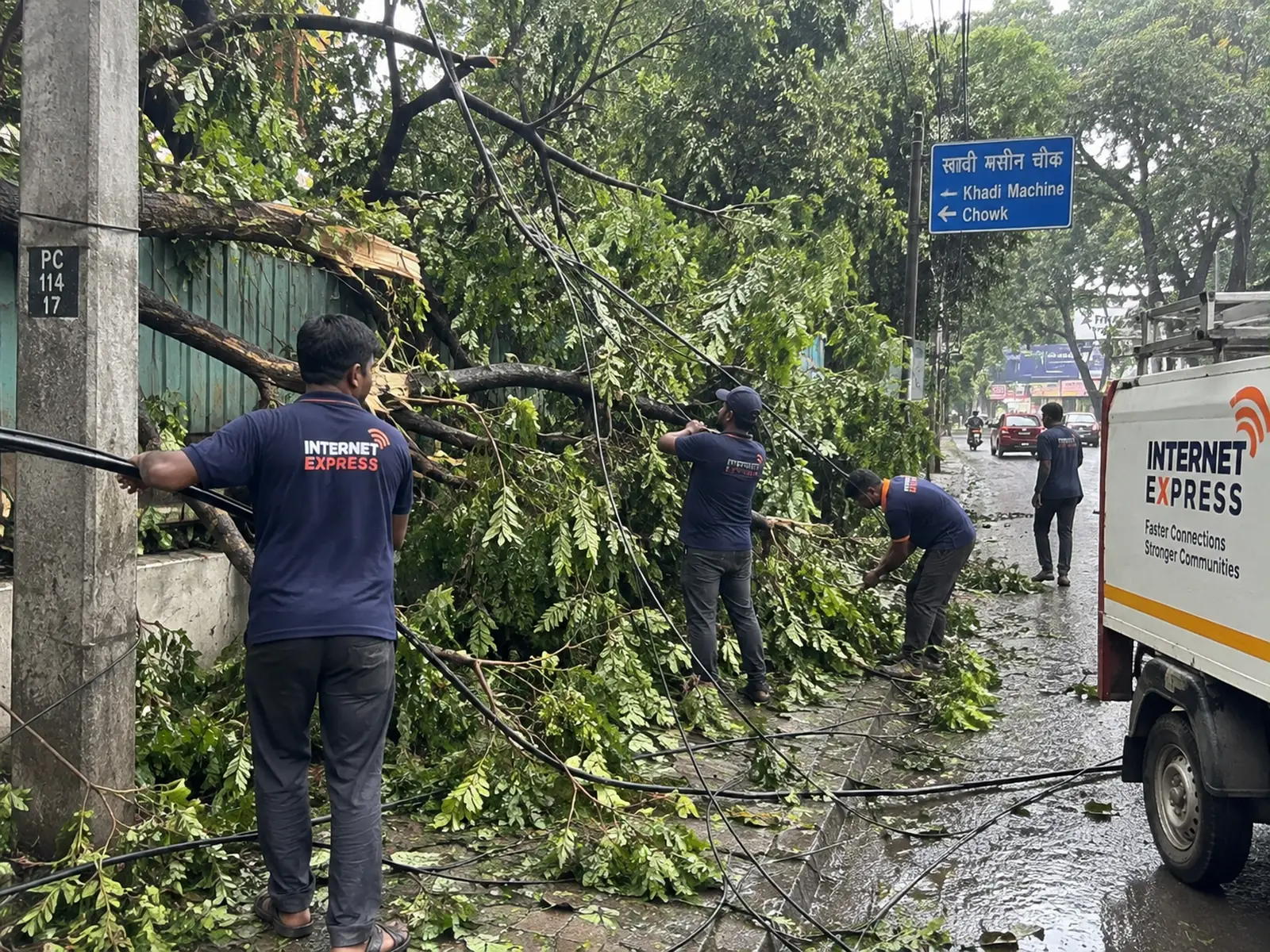
Construction traffic is heavy here: tippers, cement mixers, cranes and trailers. A tipper that drives off with its body still partly raised, or a crane arm that swings too wide, can catch an overhead span. One snag can pull a cable off several poles at once, which turns a single-point repair into re-hanging a whole stretch.
Trenches for every new building
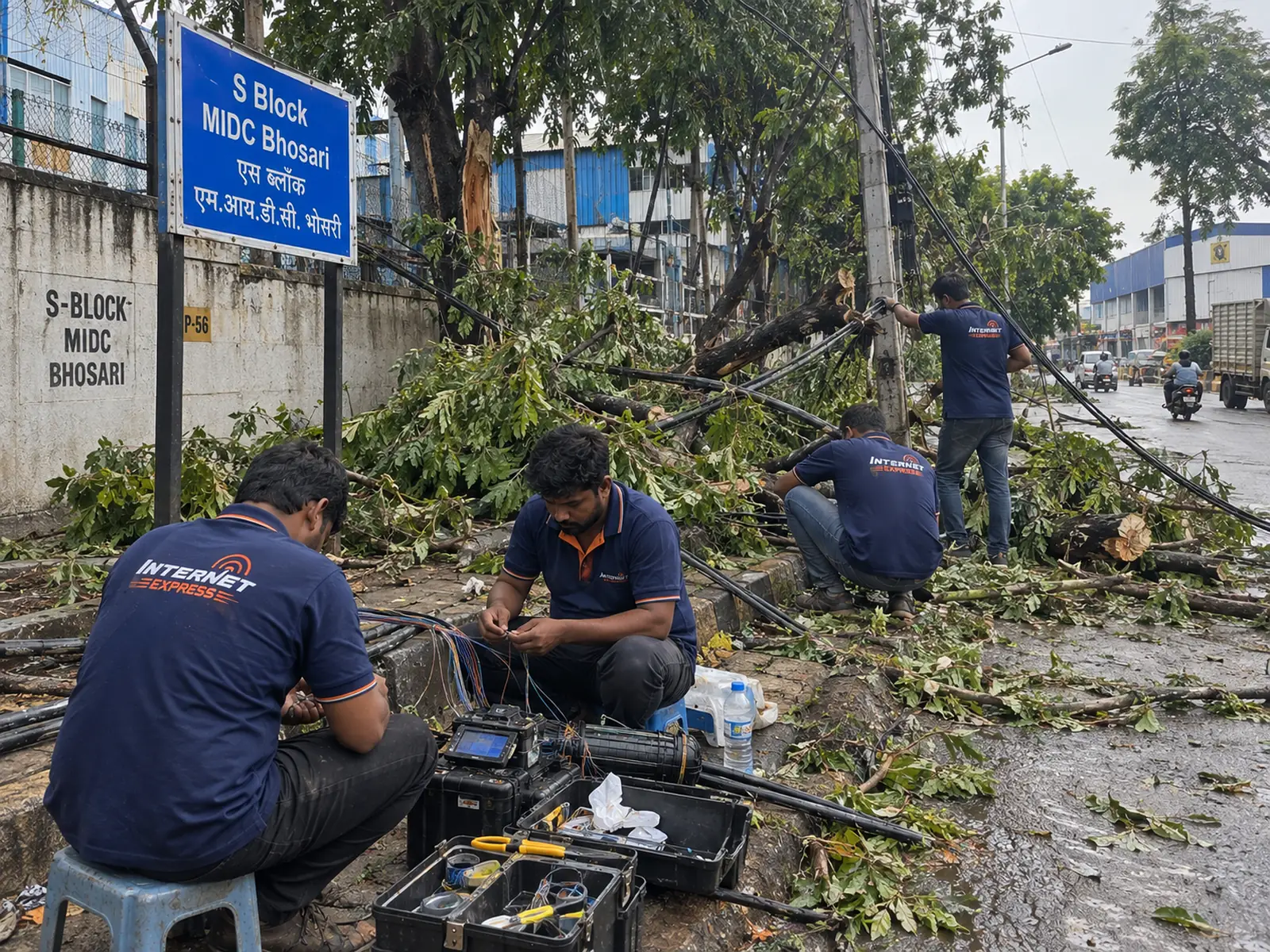
Each new project needs water, drainage, power and telecom connections. That means trenches, often dug quickly and not always with a check for what is already underground. Road-side digging is the classic cause of an underground break.
A road being widened underneath it all
Widening moves the edge of the road — and with it poles, utility lines and the ground our cable runs through. Sections we built on the roadside a few years ago can end up in the middle of a construction zone. When that happens, the cable has to be moved before the work reaches it, or it will be damaged when the work does.
What we do differently on this route
Protected rings
The shared network along the corridor is built as a ring rather than a single line. When a span on a protected part of the loop is cut, traffic can travel the other way round while the repair crew works. For a road that sees this much activity, that is the change that has made the biggest difference to how many homes notice a cut at all. What ring protection does, and its limits.
Watching the construction, not just the cable
Our field team works this corridor every day. They keep track of which sites are active, where trenching is planned and which stretches the widening will reach next, so cable can be moved or protected ahead of the work rather than repaired after it.
Height and clearance
Where spans cross entrances used by construction vehicles, cable is re-hung higher and clamped more firmly. It does not stop every snag, but it removes the easy ones.
Building-by-building checks
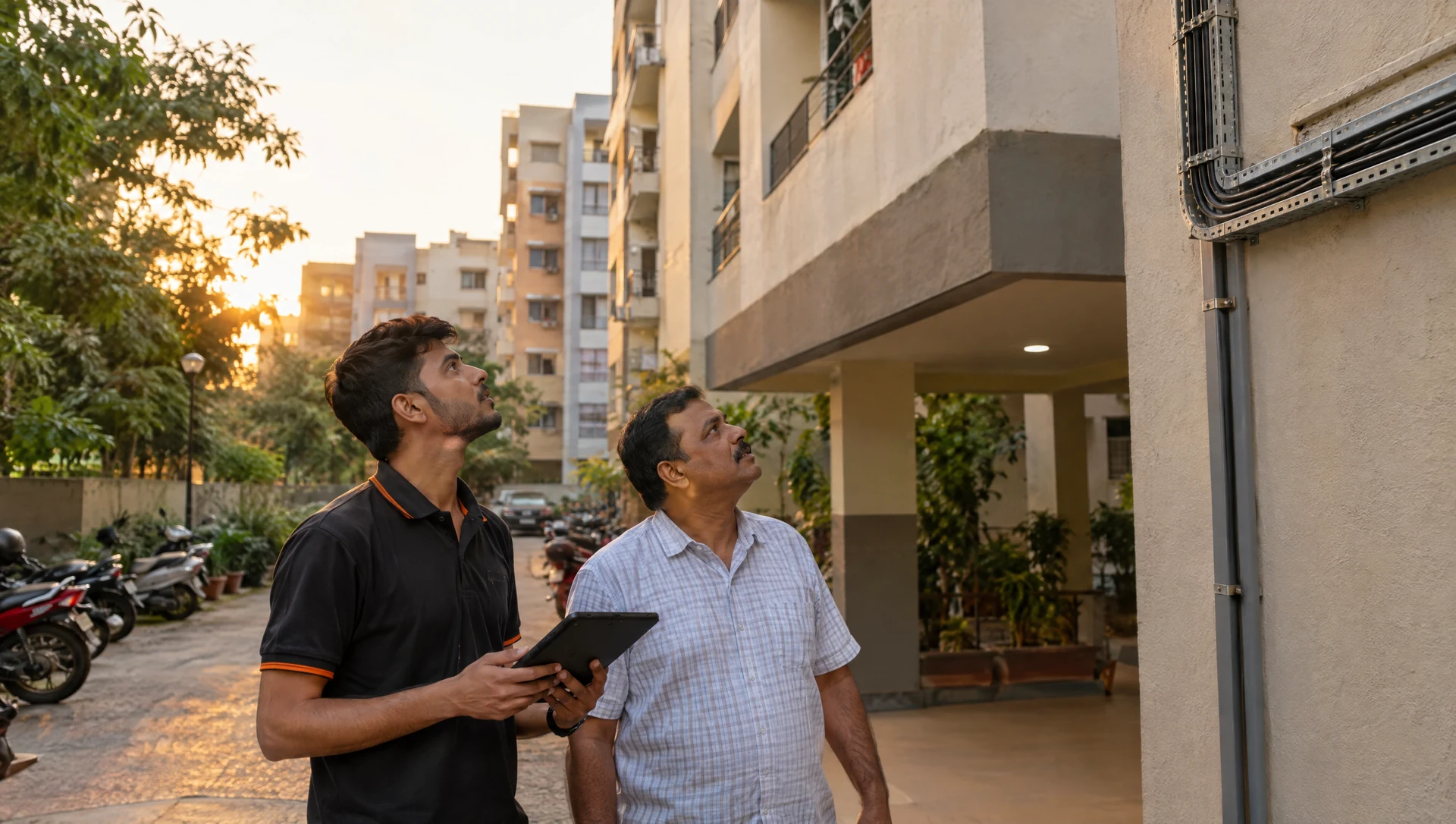
New towers come with their own riser and entry routes, and each society manages access differently. Before we promise a connection date in a new building, the route from the street into the building is checked. That is why we ask for the exact building and wing, not just the area — see why the route matters before the plan.
What residents should know
- The area name is not the final answer. Charholi and the Alandi Road corridor are listed neighbourhoods, but availability is confirmed for your exact building. Check your building.
- Report outages straight away. On a corridor this busy, several reports from the same stretch help the team pinpoint a cut faster.
- Tell us about work outside your gate. If you see a trench or pole work starting near your society, a WhatsApp message with a photo is genuinely useful.
The short version
Charholi to Alandi Road is a corridor built for trucks and cranes, and fibre has to survive alongside them. Ring protection, constant attention to the construction happening around the cable, and careful checks on every new building are how we keep it working. If you live along the corridor, see what is available in Charholi.