Ring Protection and XGS-PON: The Engineering You Only Notice When It Is Missing
Rings instead of lines, XGS-PON-ready access and a 100G-ready core across 240+ km of local fibre. What that buys you, in plain words — and an honest list of the problems it does not solve.
Good network design is invisible. When it works, nothing happens: a cable is cut somewhere and your video call carries on. Here is what sits behind the Internet Express network, explained without jargon — and just as importantly, what it cannot do.
The network in one paragraph
Internet Express runs more than 240 km of its own fibre across Pune and Pimpri-Chinchwad. Traffic from the wider internet reaches a core network, where subscriber sessions are managed, and is carried out to local access points. From there, optical line terminals feed passive fibre towards buildings, where splitters and distribution points deliver a single fibre drop into each home or office. A 24×7 network operations centre watches the whole path. It is 100% fibre from the core to the premises.
Rings instead of lines
A line has one weakness: if it is cut anywhere, everything beyond the cut goes dark. A ring is the same cable laid as a loop. If the loop is cut in one place, traffic can still reach every point by going the other way round.
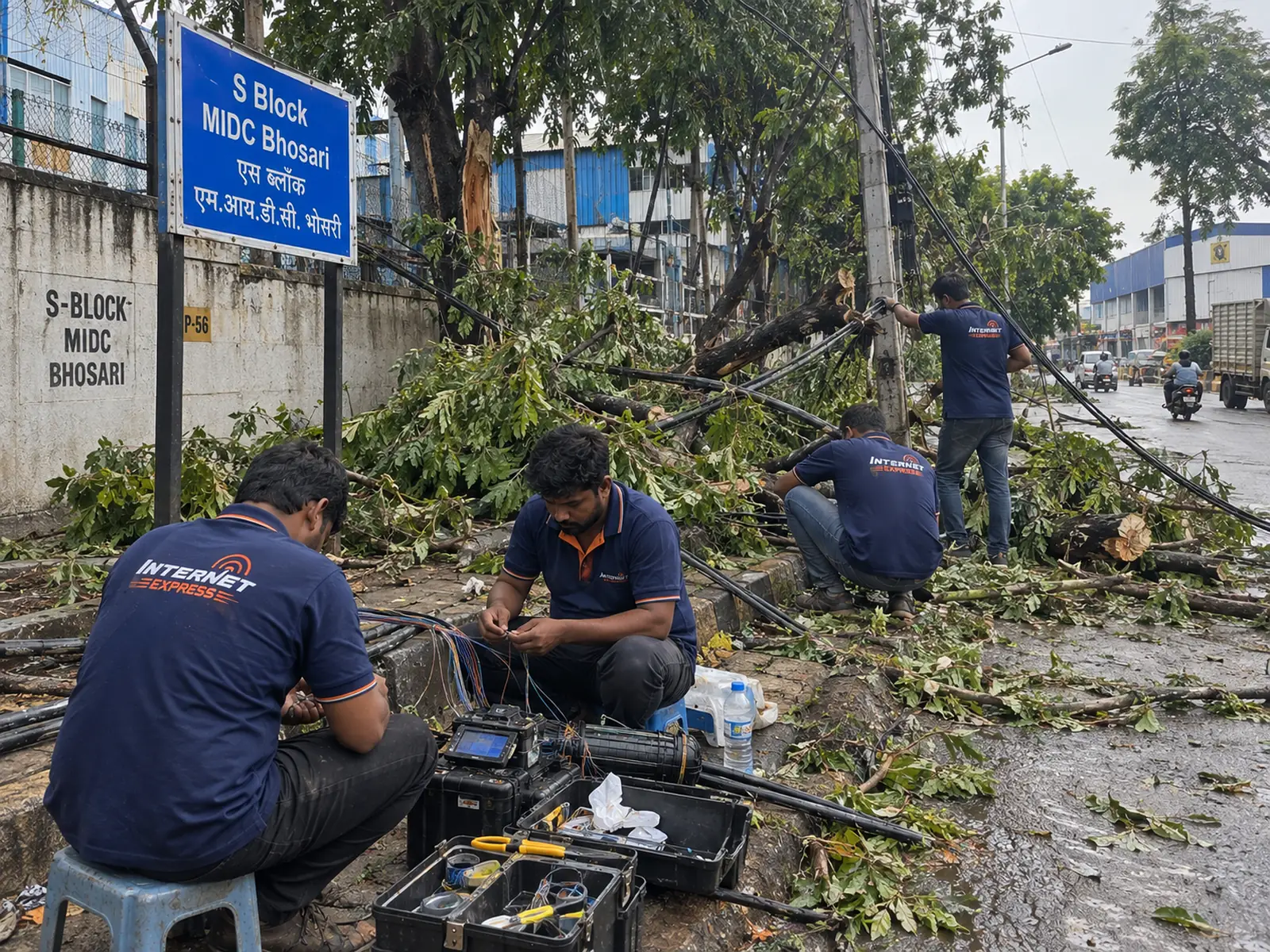
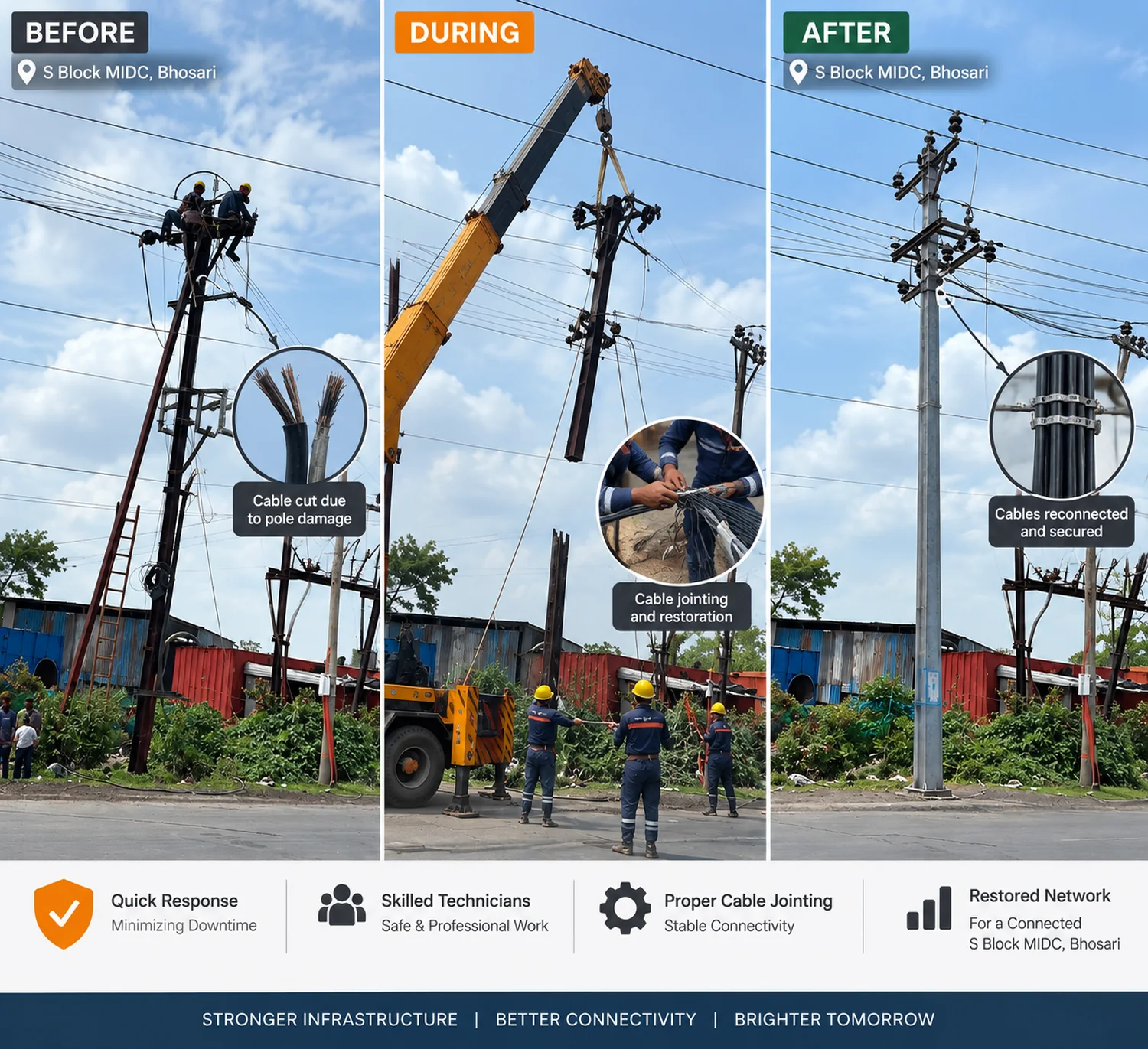
That is why ring protection matters most in places like Bhosari MIDC and the Charholi–Alandi Road corridor, where digging, pole work and heavy vehicles damage cable more often than in a quiet residential lane. On a protected span, a cut becomes a repair job rather than an outage.
XGS-PON ready
PON stands for passive optical network — the part of the network that shares one fibre from the local access point among a group of premises using unpowered splitters. GPON is the widely deployed generation. XGS-PON is the newer one, with much more capacity per fibre and symmetrical speeds.
"XGS-PON ready" means the access network has been built so this newer generation can be introduced without re-cabling streets. It does not mean every line runs on it today. It means the fibre in the ground will not be the thing that holds future speeds back.
A 100G-ready core
The core is the middle of the network, where traffic from thousands of connections comes together. Building it with 100G-ready capacity is about headroom: the busy evening hour, when everyone streams at once, should not be the moment the middle of the network runs out of room. It does not mean a home connection runs at 100 Gbps.
People watching it
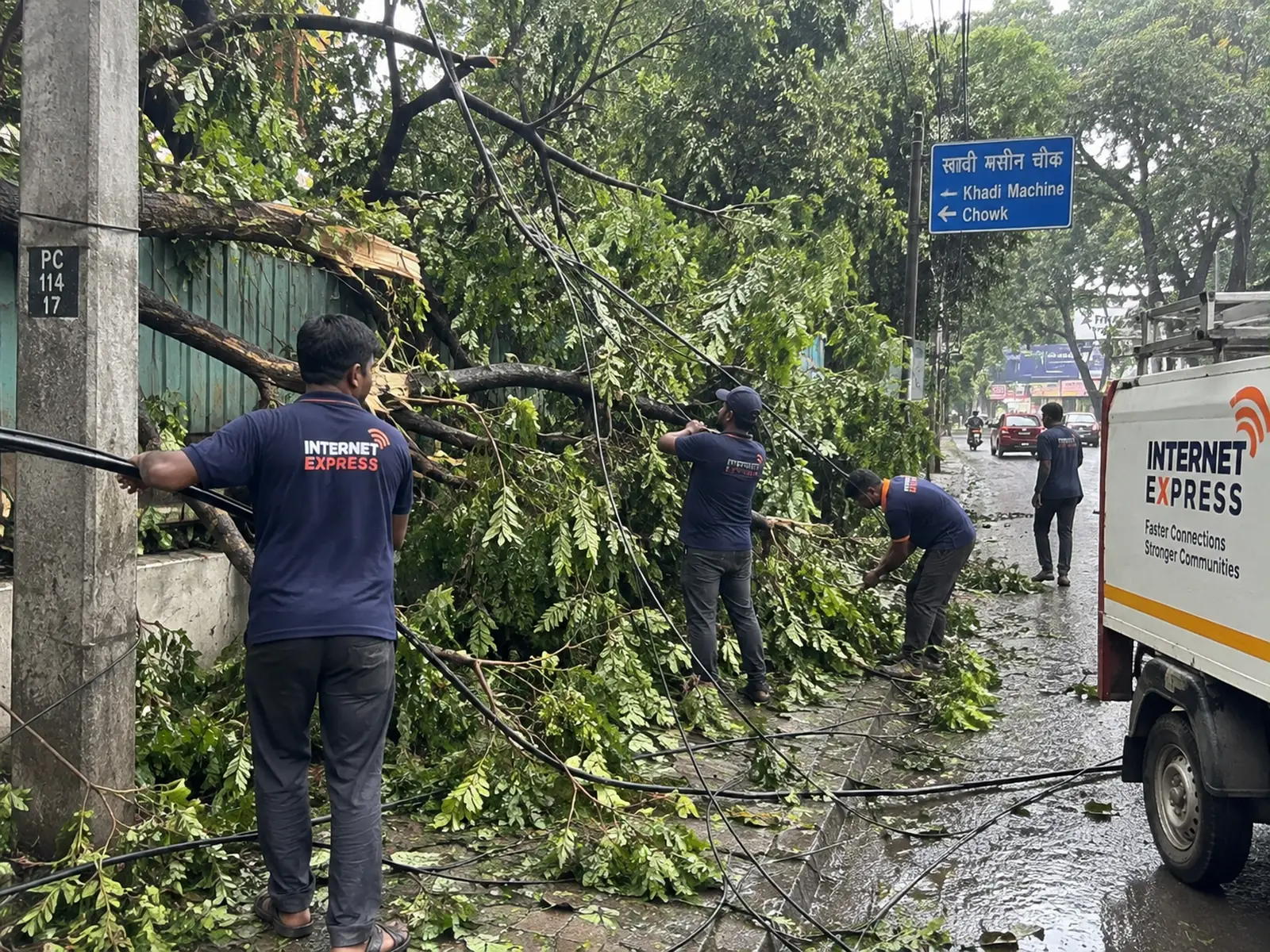
Equipment and links are monitored around the clock by our network operations centre. When a section goes dark, it is usually visible before the first customer calls, and optical testing narrows the fault to a stretch of road before a crew is sent. The same local engineers who laid the cable carry out the repair.
The honest list: what this does not solve
- The last drop is a single path. Ring protection applies to the shared network. The fibre from the access point into your building, and into your flat, is one cable. A break there needs a physical repair.
- A cut still needs fixing. Rerouting keeps traffic moving, but the damaged cable must still be repaired to restore protection for the next fault.
- Not every span is protected. Protection depends on where the fault falls and on the network design in that area.
- It does not fix Wi-Fi. Everything after the fibre box — walls, distance, router placement — is inside your home. See why Wi-Fi and wired speeds differ.
- No uninterrupted-service promise. We do not claim switching times or zero downtime. We publish how quickly support responds and how eligible downtime is credited.
Why build it this way
Because the fibre, the rings, the NOC and the engineers are ours and are all inside Pune and Pimpri-Chinchwad, faults can be found and fixed by people who already know the streets. You only notice good engineering when it is missing. We would rather you never notice it at all.
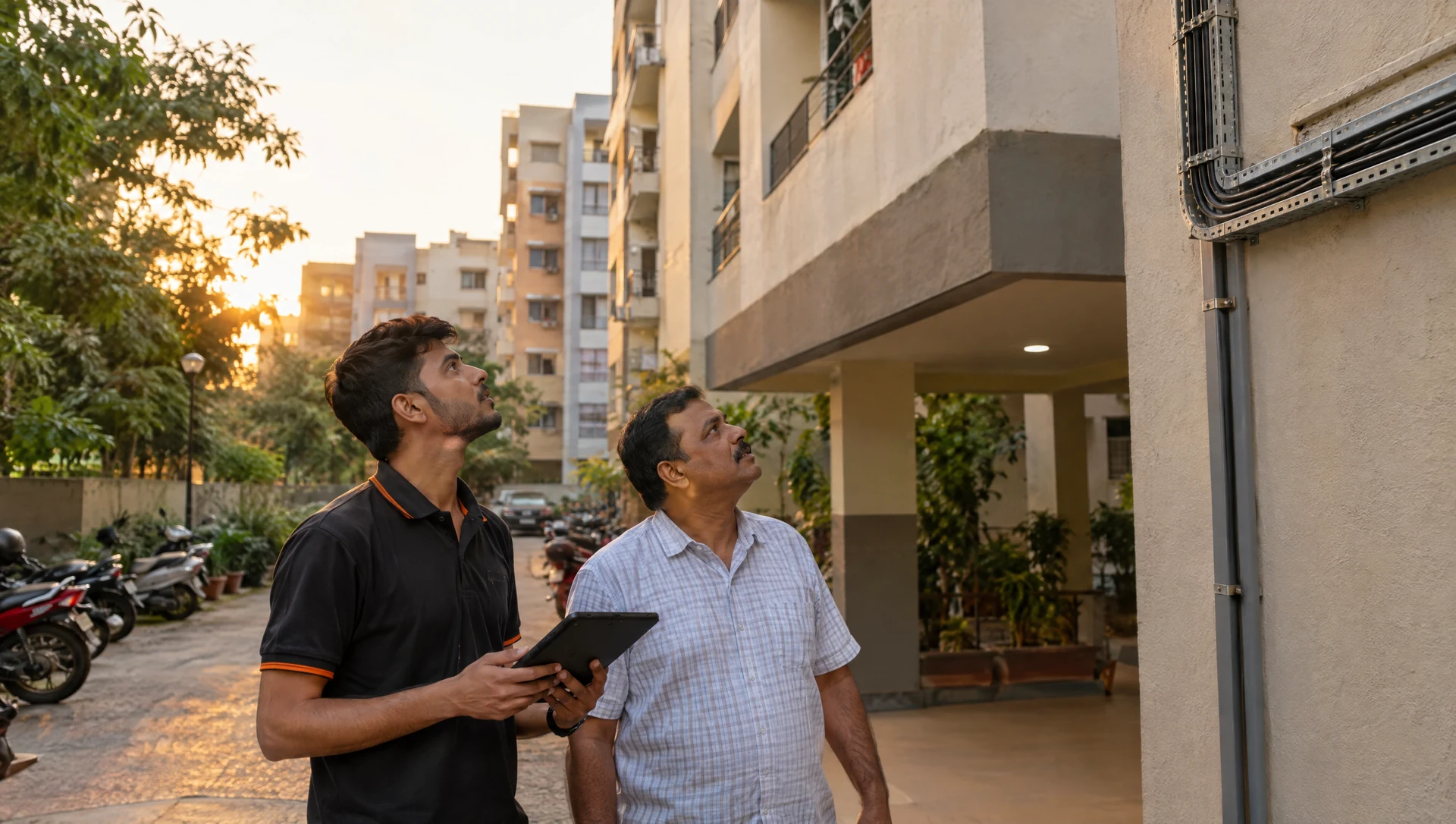
See the interactive explanation on our network page, or check your building.